How to Use Laser Optics for 3D Printing Efficiently?
Laser Optics for 3D Printing is revolutionizing manufacturing processes. Experts emphasize the significance of precise optics in enhancing print quality and speed. Dr. Emily Chen, a renowned authority in the field, states, "The future of 3D printing relies heavily on innovative laser optics." This technology facilitates finer details in prints, allowing for more complex designs.
However, challenges persist. Integrating laser optics with existing 3D printers often requires significant technical adjustments. Many businesses struggle to implement these changes effectively. It's crucial to recognize that not every attempted enhancement leads to success. There may be setbacks in aligning new optics with traditional systems.
Laser Optics for 3D Printing can greatly improve efficiency, but it demands experimentation and learning from mistakes. The potential for transforming production lines is immense. Yet, with every advancement, reflection on the implementation process is necessary. Embracing both successes and failures will ultimately drive innovation in this growing industry.
Understanding the Basics of Laser Optics in 3D Printing
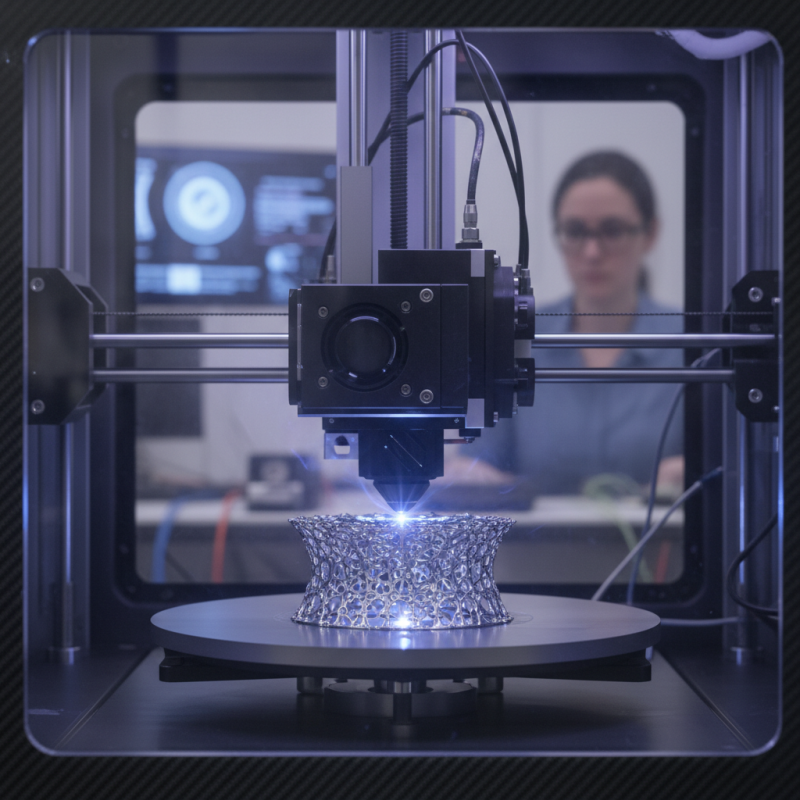
Laser optics play a crucial role in enhancing the efficiency of 3D printing. Understanding the basics can help you achieve better results. At its core, laser optics focus light energy precisely to fuse materials layer by layer. This method allows for intricate designs that other techniques struggle to achieve.
When using laser optics, it’s essential to calibrate the laser correctly. An imprecise setup can lead to inadequate bonding between layers. Utilize a focus gauge to test and adjust beam focus. Pay attention to this step; it can make or break the final product's quality.
Tips: Always experiment with different materials. Certain polymers or metals respond better to laser parameters than others. Document your findings to reference in future projects. Another tip is to control the speed of your print. Too quick, and the layers may not adhere properly. Too slow can cause overheating.
Maintaining the optical components is also crucial. Dust and debris can scatter the laser light, leading to poor-quality prints. Regularly clean lenses and mirrors to keep them in optimal condition. Reflect on your methods often; there’s always room for improvement in technique and results.
Types of Laser Optics Used in 3D Printing Technologies
Laser optics play a crucial role in modern 3D printing. Various types of laser optics enhance printing efficiency and quality. Key types include fiber lasers, CO2 lasers, and solid-state lasers. Fiber lasers are favored for their compact size and high energy efficiency. Reports indicate that they can achieve an impressive wall-plug efficiency of up to 30%. This allows for faster printing speeds and reduced energy costs.
CO2 lasers are widely used for their versatility. They excel in cutting and engraving various materials, making them ideal for complex designs. However, their performance can be hindered by factors like material absorption rates. Solid-state lasers, including diode-pumped lasers, offer improved precision in metal printing applications. This makes them increasingly popular for high-resolution prototypes. While these lasers are powerful, they require careful calibration, adding complexity to the setup process.
Despite advancements, challenges remain in optimizing laser optics designs. Adjustments often lead to trade-offs, such as reduced print speed for higher resolution. Industry insights suggest that achieving the right balance is critical for efficient production. Technological refinements and ongoing research aim to overcome these hurdles, ultimately shaping the future landscape of 3D printing.
Efficiency of Different Types of Laser Optics in 3D Printing
Key Advantages of Utilizing Laser Optics for 3D Printing
Laser optics in 3D printing offer numerous advantages. One key benefit is precision. Lasers can create detailed patterns. This results in high-quality prints with sharp edges. The accuracy reduces the need for post-processing. Designers can save time and effort.
Another significant advantage is speed. Lasers work faster than traditional methods. This efficiency allows for quicker production. However, settings must be carefully calibrated. Otherwise, the speed may compromise quality. Finding the right balance is essential.
Laser optics also enhance material versatility. They can work with various substances, from plastics to metals. This flexibility opens new possibilities for design. Yet, not all materials respond equally to laser technology. Understanding these nuances is crucial for successful outcomes. Through exploration, users can better harness laser optics for their 3D printing projects.
How to Use Laser Optics for 3D Printing Efficiently? - Key Advantages of Utilizing Laser Optics for 3D Printing
| Advantage | Description | Impact on 3D Printing | Examples of Applications |
| Precision | Laser optics allow for high precision in layer deposition. | Improved details and reduced post-processing time. | Medical implants, aerospace components. |
| Material Variety | Compatible with a broader range of materials than traditional methods. | Greater design flexibility and material performance. | Complex geometries in automotive and consumer products. |
| Speed | Faster processing times due to laser efficiency. | Quicker production cycles and lower costs. | Rapid prototyping and short-run manufacturing. |
| Energy Efficiency | Lower energy consumption compared to traditional 3D printing methods. | Reduced operational costs and environmental footprint. | Sustainable manufacturing practices. |
| Customization | Easier to customize products on-demand. | Enhances customer satisfaction and market responsiveness. | Personalized consumer goods and medical devices. |
Techniques for Optimizing Laser Parameters in 3D Printing
Optimizing laser parameters is crucial for efficient 3D printing. The right settings can enhance precision and reduce waste. A key factor is the laser power. Higher power may increase speed but can also lead to overheating. It’s essential to find a balance. For instance, a power level set too high can create warping. Lower power can improve detail but decrease production speed. It may require several test runs to find the sweet spot.
Next, focus on the speed of the laser. Adjusting the speed affects layer adhesion. If the laser moves too quickly, layers may not fuse well, which results in structural weaknesses. Conversely, a slower speed improves bonding but increases print time. Another factor to consider is the scanning strategy. Different patterns can impact the quality of the final product. For example, zigzag patterns may offer better material usage than a straight-line approach. Experimentation is necessary.
One important aspect is the environment. Temperature and humidity can alter material behavior. Extreme conditions may lead to inconsistent results. It is often overlooked but has a significant effect. Regular calibration of equipment can also prevent issues, ensuring that your laser optics are functioning optimally. Remember, each adjustment should be documented. The path to efficiency is through continuous reflection and improvement.
Future Trends and Innovations in Laser Optics for 3D Printing
The future of laser optics in 3D printing is rapidly evolving, showing promise for enhanced precision and efficiency. According to a recent industry report, the use of laser-based techniques can increase print speeds by up to 50%. This significant improvement creates new opportunities for industries such as aerospace and healthcare. These fields require high-quality parts, where precision is non-negotiable.
Innovations in laser technology are opening doors to new materials. Emerging lasers can process polymers and metals more effectively. This expands the range of possible applications, yet challenges remain. For instance, the heat-affected zones in laser printing can lead to material deformation. Understanding this phenomenon is crucial for optimizing processes. Despite advancements, achieving ideal melting points remains a hurdle for many manufacturers.
Moreover, as laser optics develop, costs can be a double-edged sword. While some laser systems become more accessible, others may still pose financial challenges. Balancing investment and expected returns is essential for businesses. Trends indicate that companies must invest wisely to keep up with technological advancements. Otherwise, they risk falling behind in a competitive landscape. The need for continuous learning and adaptation is evident in this ever-changing market.