Choosing the right Automatic Glass Cutting Machines can shape a glass workshop’s safety, accuracy, and daily output. The decision should begin with real production needs, not attractive catalog images. Consider glass thickness, sheet size, cutting speed, edge quality, and the types of glass processed. Clear glass, laminated glass, Low-E glass, and coated panels may require different tools and settings.
A reliable machine should offer stable movement, accurate positioning, strong vacuum support, and responsive safety sensors. Software compatibility also matters. Good optimization software can reduce waste by arranging cutting patterns efficiently, especially when expensive glass is involved. Ask suppliers about calibration, blade replacement, training, and service response times. A machine may look impressive on a showroom floor. Workshop conditions are different.
Practical evaluation is essential. Watch the machine cut a full-size sheet, inspect the cut line, and measure positioning accuracy. Listen for unusual vibration. Check whether operators can load glass without awkward movement. Energy use, maintenance access, and spare-part availability should also influence the final choice. The cheapest option may create hidden costs through waste and downtime. No machine is perfect. Even advanced equipment needs skilled operators, regular inspection, and sensible production planning. A careful buyer compares measurable performance with long-term support, then selects equipment that fits today’s workload without limiting tomorrow’s growth.
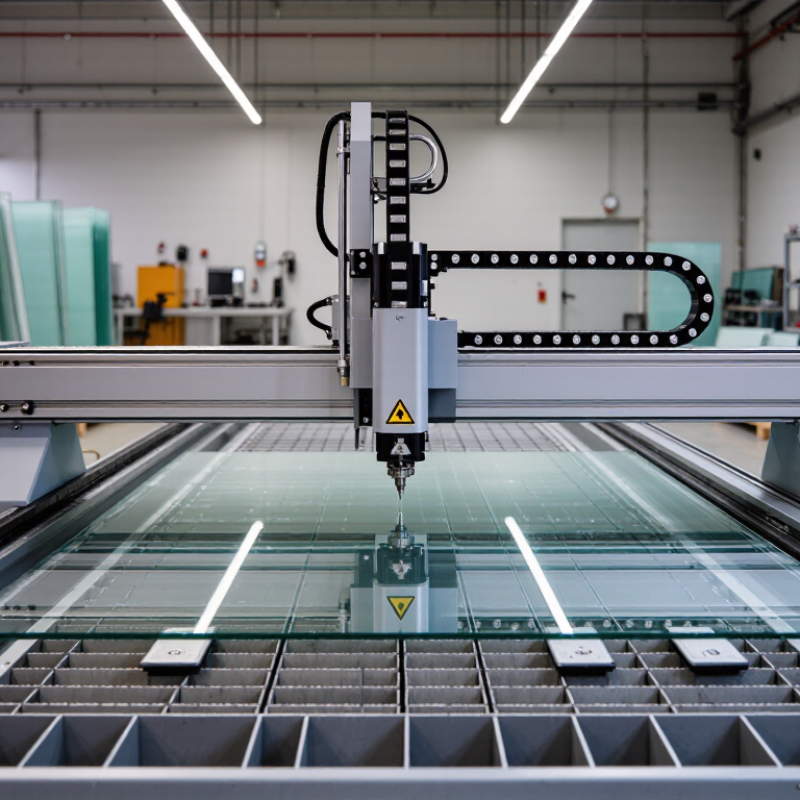
Automatic glass cutting machines differ by cutting task, glass structure, and production volume. A straight-line cutting table suits rectangular sheets for windows, doors, and furniture panels. It uses programmed measurements and a moving cutting head. This reduces manual marking errors. However, it may waste material when orders contain many irregular shapes.
CNC shape-cutting machines handle circles, arches, and complex templates. They are useful for customized projects and frequent design changes. Laminated glass cutting systems use specialized scoring and separation processes for layered sheets. Some production lines also include low-emissivity coating removal equipment. Check the machine’s supported thickness, cutting tolerance, table size, and software compatibility. A fast machine is not always the better choice. Poor handling can leave chips along the edge.
How to Choose Automatic Glass Cutting Machines?
Matching the machine to your glass is more important than choosing the fastest model. Float glass, low-E glass, laminated glass, and patterned glass require different cutting settings. A machine for standard 4–6 mm float glass may struggle with thicker sheets or coated surfaces. Check the available cutting pressure, tool angle, scoring wheel, and automatic pressure control. These details affect score depth and edge quality.
Sheet size matters just as much. Measure your largest regular sheet, not only today’s common size. The cutting table should provide enough working space and stable support around the glass. A narrow table can increase breakage during loading and movement. Check positioning accuracy, bridge rigidity, vacuum handling, and software nesting functions. For laminated glass, confirm that the machine supports film scoring and separation processes. Tempered glass cannot be cut after tempering, so cutting must happen earlier.
Tips: Ask for test cuts using your actual materials. Inspect the score line, corner quality, and breakout force. Review maintenance access, spare cutting tools, and operator training. Dust and tiny glass particles can affect sensors over time. Regular cleaning is essential. A perfect specification rarely survives the factory floor. I would also leave capacity for future sheet sizes, because replacing a table later is expensive. Safety guards, emergency stops, and documented operating procedures should be verified before production begins.
Choosing an automatic glass cutting machine requires more than reading its maximum cutting speed. Accuracy should be tested on the glass types used daily, including 4 mm float glass and thicker laminated sheets. Inspect cut lines under bright light. Small edge chips can become costly breakage during later processing.
Speed can mislead. A machine may complete one cut quickly, yet lose time during loading, positioning, or tool changes. Record the full cycle time, not only the cutting motion. In production trials, measure cuts per hour, restart frequency, and material waste. A stable machine with slightly lower speed may deliver more usable sheets. Measure the waste.
Production capacity also depends on software, storage layout, and operator workflow. Check whether the machine handles mixed orders without frequent manual adjustments. Review its rated duty cycle against your expected daily volume. A machine designed for eight hours may struggle under continuous operation. That difference matters.
Ask for repeatability data, not only a single accuracy claim. Test several sheets and compare dimensions with calibrated measuring tools. Temperature, glass dust, and worn cutting wheels can affect results. Maintenance access should be practical, because delayed servicing reduces capacity. I once saw a fast system underperform because its loading area was poorly arranged. The specification was impressive, but the workflow was not. Examine both.
Compare cutting accuracy, maximum cutting speed, and typical production capacity when evaluating automatic glass cutting machines. Lower accuracy values indicate tighter dimensional control.
The benchmark uses representative non-brand machine classes and commonly published technical ranges: cutting accuracy of ±0.2–0.5 mm, maximum cutting speeds of 80–150 m/min, and production capacities of approximately 10–25 standard sheets per hour. Actual results depend on glass size, thickness, loading time, optimization software, and operator workflow.
Choosing an automatic glass cutting machine starts with its control over repetitive work. The International Federation of Robotics reported 541,302 industrial robot installations worldwide in 2023. That figure shows automation is expanding, but speed alone is a weak buying criterion. Check sheet positioning accuracy, automatic loading, cutting-path control, and whether operators can adjust settings without entering hazardous zones. A fast machine with poor software feedback can create expensive waste.
Safety deserves closer inspection. The U.S. Bureau of Labor Statistics recorded 5,283 fatal work injuries in 2023, across all industries. This broad figure does not describe glass cutting specifically, but it reinforces a practical point: safeguards cannot be treated as decoration. Look for fixed guards, interlocked access doors, emergency stops, light curtains, and controlled restart functions. Verify that the design follows principles in ISO 12100 and safety-related control guidance in ISO 13849-1. Ask for test records, not reassuring language.
Maintenance needs should be visible before purchase. Request preventive-maintenance intervals, blade replacement procedures, lubrication points, diagnostic logs, and typical repair times. Dust around sensors and small glass fragments can cause frustrating faults. I would inspect a running machine personally, because a polished demonstration can hide awkward cleaning access. The International Federation of Robotics also emphasizes data-driven production and system integration; useful diagnostics should show trends, not merely alarms. One overlooked detail remains critical: staff training. A machine may be technically safe, yet daily shortcuts can defeat its safeguards. Consider that failure honestly.
Choosing an automatic glass cutting machine requires more than comparing purchase prices. According to the International Federation of Robotics’ World Robotics 2024 report, 541,302 industrial robots were installed worldwide in 2023. This reflects a wider shift toward repeatable automation, but automation is not automatically profitable. Measure cutting speed, yield, energy use, maintenance hours, and operator training before calculating payback.
Supplier support often decides whether the machine creates value or expensive downtime. Ask for response times, spare-parts availability, remote diagnostics, installation training, and documented software updates. A lower-priced machine may become costly if one failed sensor stops a production line for three days. Request references from factories processing similar glass thicknesses. Talk to users, not only sales teams.
Long-term value also depends on data and adaptability. Deloitte’s 2024 Global Smart Manufacturing Survey found that 86% of manufacturers expect smart manufacturing to become a major competitiveness factor within three years. Choose equipment that records breakage, blade wear, cutting accuracy, and material waste. These details support continuous improvement. Still, digital features can be oversold. A basic system with reliable mechanics may outperform a sophisticated system nobody maintains. Leave room for doubt. Recheck the payback model after including electricity, tooling, rejected panels, service contracts, and training. The cheapest quotation is rarely the cheapest operating decision.