2026 How to Choose a CNC Table for Your Business?
Choosing a CNC table in 2026 requires more than comparing prices and cutting areas. The right platform must match your materials, machine size, production volume, and available workshop space. A compact sign shop may need a rigid vacuum table for clean, repeatable routing. A metal fabricator may require a heavy steel bed, strong clamping, and reliable heat control. These differences matter because an attractive specification sheet cannot reveal every practical limitation.
A suitable cnc table should support accurate work, safe operation, simple maintenance, and future upgrades. Check the table’s load capacity, surface flatness, compatibility with your controller, and access to replacement parts. Ask suppliers for documented tolerances, test results, and customer references from similar industries. Direct demonstrations can reveal vibration, noise, dust collection problems, and awkward material loading. Small details become expensive later.
Think beyond today’s orders.
Real workshop experience often exposes gaps in early planning. A table that handles thin plywood beautifully may struggle with heavy aluminum sheets. A larger bed can increase productivity, yet it may reduce walking space and raise installation costs. No table is perfect. The best choice balances precision, durability, workflow, and total ownership cost. This guide examines the key selection criteria for 2026, helping business owners compare equipment with clearer expectations and fewer costly surprises. Some recommendations may need adjustment as technology and production demands change. That is part of making a responsible decision.
What Is a CNC Table and How Does It Support Business Operations?
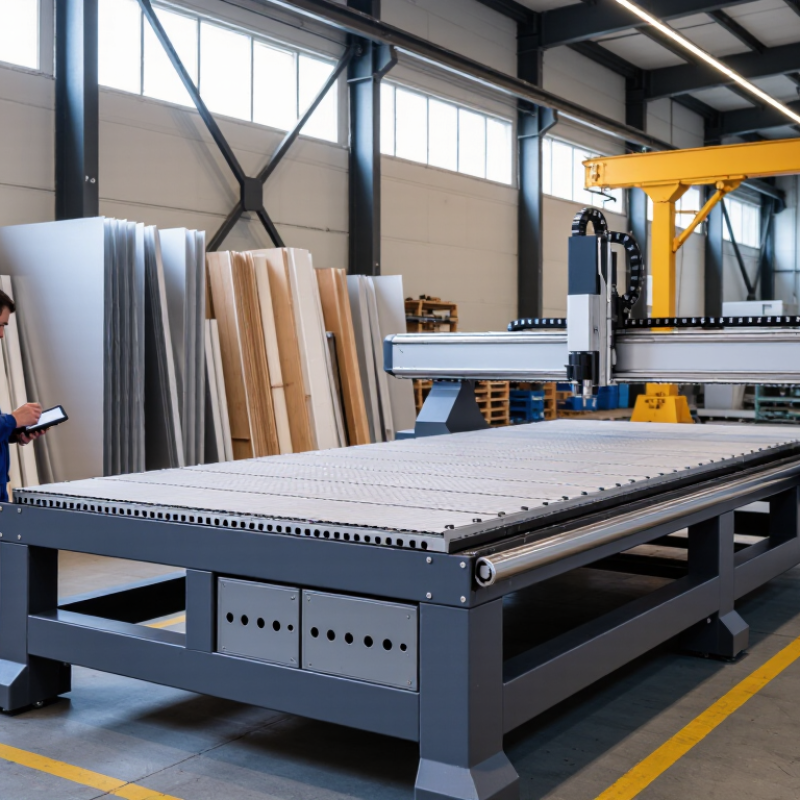
A CNC table is the rigid work surface that holds material beneath a computer-controlled cutting tool. It may include a spoilboard, vacuum zones, T-slots, clamps, and a frame supporting the moving gantry. These parts keep sheets or smaller workpieces stable during routing, drilling, engraving, or controlled cutting. For a business, stability is not a luxury. It directly affects accuracy, repeatability, material waste, and operator time.
In daily production, the table connects design files with physical workflow. An operator loads a panel, sets the origin, secures the material, and checks the tool path. After cutting, parts can move to sanding, assembly, or inspection with fewer manual corrections. A vacuum surface can speed loading, while T-slots suit irregular pieces and short runs. Choose based on material size, workload, dust control, and floor space. Measure real stock dimensions, not only advertised cutting capacity. That small habit prevents awkward overhangs and repeated repositioning.
However, a CNC table cannot fix poor files, dull tools, or careless setup. Even a strong table may lose accuracy when its surface is uneven. Routine checks should include spoilboard flatness, clamp condition, vacuum performance, and frame alignment. Keep records of setup times, failed cuts, and maintenance dates. These notes reveal whether a larger table will improve output or simply occupy valuable space. Performance claims deserve testing. Run a representative job before making a major purchase.
Which CNC Table Types Match Different Materials and Applications?
2026 How to Choose a CNC Table for Your Business?
Which CNC Table Types Match Different Materials and Applications?
Choosing a CNC table starts with the material, not the advertised cutting speed. Wood, MDF, plastics, and foam usually suit vacuum router tables. Their flat surfaces support large sheets and clean nesting. Aluminum requires a rigid T-slot table, suitable tooling, and controlled chip removal. Steel plate generally demands a CNC plasma table with strong fume extraction. According to Grand View Research, the global CNC machine market reached approximately US$83.99 billion in 2023. That growth reflects wider demand for flexible production equipment.
Waterjet tables fit stone, glass, hardened metals, and heat-sensitive laminates. They create no heat-affected zone, but abrasive disposal adds operating work. Laser tables offer precise sheet-metal cutting, especially for thinner materials. However, reflective metals can challenge process stability. The best choice depends on thickness, tolerances, batch size, and finishing requirements. Speed alone misleads.
A perfect match rarely exists. I would not select a table before testing the actual material sample. Small kerf differences can ruin tight-fitting parts. The International Federation of Robotics recorded 541,302 new industrial robot installations in 2023, showing stronger movement toward connected production. A table with probing, automatic loading, or dust control may therefore deliver more value than higher peak speed. Still, those features can increase maintenance. That trade-off is easy to underestimate.
How to Evaluate Size, Accuracy, Speed, and Load Capacity?
2026 How to Choose a CNC Table for Your Business?
A CNC table should match your materials, workspace, and daily production rhythm. Measure the largest workpiece, then leave clearance for clamps, dust collection, and operator movement. A table that barely fits may create expensive handling problems. I once underestimated this space and lost useful cutting time every morning. Check the usable cutting area, not only the advertised table dimensions.
Accuracy needs practical testing. Ask for positioning accuracy, repeatability, and flatness data under working conditions. A supplier’s certificate is useful, but a test cut reveals more. Measure a square, circle, and repeated holes with calibrated tools. Watch for heat, vibration, and material movement. Precision is not a single number. It depends on setup, maintenance, and operator habits.
Speed should serve the material, not impress your purchasing team. Compare cutting speed, rapid movement, acceleration, and tool-change time. A faster machine can still perform poorly with heavy stock or delicate edges. Load capacity must include the workpiece, fixtures, and cutting forces. Keep a safety margin. Do not calculate only the plate weight. Ask how the table behaves near its maximum load, because published limits may not reflect continuous production. I would also review service records and spare-part availability, although these details are sometimes difficult to verify. Test before committing. That step may feel slow, but replacing an unsuitable table is slower.
What Features, Costs, and Safety Factors Should Buyers Compare?
Choosing a CNC table for your business starts with the work it must perform daily. Compare cutting area, load capacity, spindle or torch compatibility, positioning accuracy, and software support. A larger table is not automatically better. It may consume valuable floor space and require more powerful extraction. Check whether the frame stays rigid during long cuts, especially with thick or heavy materials. Ask for test-cut records, maintenance schedules, and realistic accuracy data rather than relying only on promotional figures.
Cost comparison should include more than the purchase price.
Add tooling, software, installation, electrical work, ventilation, consumables, training, and planned maintenance. A cheaper table can become expensive when downtime increases. Request a written warranty and confirm the availability of replacement parts. Payment terms also matter for smaller workshops. Cash flow is often overlooked. That mistake can hurt.
Safety features deserve equal attention.
Look for guarded moving parts, accessible emergency stops, reliable grounding, overload protection, and clear operator controls. Dust, fumes, noise, sparks, and sharp offcuts need practical controls, not vague promises. Check extraction performance and confirm that the table suits your materials.
Keep documented risk assessments and training records, following applicable local requirements. I would also observe a live demonstration, because a quiet showroom cannot reveal vibration, smoke, or awkward loading. No machine is perfect. Your team’s habits, workspace, and maintenance discipline will influence safety as much as the table itself.
How Can Businesses Select, Install, and Maintain the Right CNC Table?
Choosing a CNC table starts with the workpiece, not the advertised load. Measure material size, weight, thickness, and clamping points. A table that is too small creates risky overhangs and awkward setups. A table that is too large may waste floor space and energy.
The International Federation of Robotics reported
541,302 industrial robots were installed worldwide in 2023.
This growth signals a practical need for repeatable, automation-ready workholding. Select a rigid surface, compatible fixtures, reliable leveling controls, and enough clearance for tools and operators. Check positioning accuracy under real cutting loads, not only in an empty test. That difference matters. The World Economic Forum’s Future of Jobs Report 2025 found that
58% of employers expect robotics and automation to transform their operations by 2030.
Your table should therefore support future sensors, automated loading, or digital inspection.
Installation deserves the same care as purchasing. Verify the foundation, anchor points, electrical safety, ventilation, and access for maintenance. Use a calibrated level, then confirm geometry with a dial indicator or laser measurement system. Record the baseline values. Maintenance should include daily surface cleaning, weekly fastener checks, lubrication at the specified intervals, and periodic flatness verification. ISO 230-2 provides a recognized framework for testing positioning accuracy and repeatability. In practice, operators often postpone these checks until defects appear. That is expensive. A short logbook, clear ownership, and honest review of recurring errors can reveal poor fixturing, vibration, or incorrect cutting parameters before they damage production.