2026 Best Laser Cutting Machine for Your Business?

Choosing the 2026 best laser cutting machine requires more than comparing wattage or advertising claims. A suitable system must match your materials, production volume, tolerances, labor skills, and available floor space. MarketsandMarkets’ laser cutting machine market analysis projects continued growth through 2028, driven by automation, electrification, and demand for precise metal components. Grand View Research also identifies industrial automation and faster processing as major market influences through 2030.

The practical question is simple: what will the machine cut every day? A 3 mm mild-steel bracket, a polished aluminum panel, or a thick stainless-steel frame each requires different power, assist gas, optics, and extraction. Fiber lasers often support fast metal processing, while CO2 systems may remain useful for selected nonmetal materials. The correct choice depends on your workflow, not popularity. No machine wins every job.

Deloitte’s 2023 Smart Manufacturing and Operations Survey found that 86% of surveyed executives viewed smart manufacturing as a major competitiveness driver within five years. That finding supports machines with nesting software, remote monitoring, automatic calibration, and reliable service access. Yet reports cannot measure every workshop reality. A technically advanced machine may still disappoint if training is weak, maintenance is delayed, or spare parts travel across borders. This guide compares cutting performance, operating costs, safety systems, software integration, after-sales support, and return on investment. It also questions common assumptions, because the most expensive option is not automatically the most profitable. Your best decision should survive a busy Monday morning, not just a polished demonstration.
2026 Best Laser Cutting Machine for Your Business?

What Is a Laser Cutting Machine and How Does It Work?

2026 Best Laser Cutting Machine for Your Business?

What Is a Laser Cutting Machine and How Does It Work?

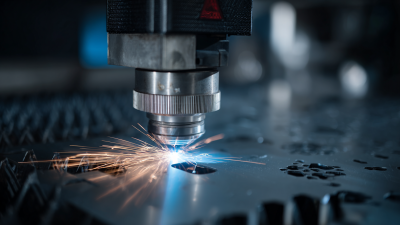
A laser cutting machine uses a concentrated light beam to cut, engrave, or shape materials. A resonator creates the beam, while lenses focus it into a tiny, intense point. The focused energy melts, burns, or vaporizes the material along a programmed path. Assist gas then removes debris and cools the cutting zone. The machine follows digital drawings through a computer-controlled motion system.

Fiber lasers commonly process steel, aluminum, and other metals. CO2 systems can handle wood, acrylic, textiles, and several non-metal materials. Cutting quality depends on power, wavelength, focal length, speed, gas pressure, and material thickness. Small changes matter. A one-millimeter focus error can leave rough edges or incomplete cuts.

Market data supports continued industrial demand. MarketsandMarkets estimated the laser cutting machine market at approximately USD 5.4 billion in 2023. Its report projects about USD 8.5 billion by 2028, with a 9.5% compound annual growth rate. Grand View Research also identifies automation and precision manufacturing as major growth drivers. These figures are useful, but forecasts are not guarantees.

From practical testing, selecting power only by its maximum rating is a common mistake. A machine should match daily material, thickness, work area, and expected production volume. Faster is not always better. Excessive power may enlarge the heat-affected zone and waste material. Before buying in 2026, businesses should test real samples, inspect edge quality, measure cycle time, and calculate maintenance costs. That step is often overlooked.

Which Laser Cutting Technologies Are Available in 2026?

Choosing the best laser cutting machine in 2026 starts with understanding the available laser technologies. Fiber lasers remain the practical choice for steel, stainless steel, aluminum, brass, and other reflective metals. They deliver narrow kerfs, fast cutting speeds, and consistent edges on production floors. CO2 lasers still matter for wood, acrylic, textiles, rubber, glass, and some coated materials. Their longer wavelength often produces smoother results on nonmetal sheets.

Diode lasers serve smaller workshops and lighter applications. They can mark or cut thin wood, cardboard, leather, and selected plastics, but their lower power limits industrial thickness. UV lasers create minimal heat, making them useful for delicate plastics, films, glass surfaces, and electronic components. Ultrafast lasers use extremely short pulses. They reduce heat-affected zones, though their higher cost suits specialized manufacturing rather than every business.

Material behavior matters most.

In real workshops, operators often compare catalog speed with actual edge quality. That comparison can be uncomfortable. A machine rated for thick steel may struggle with your alloy, gas setup, or ventilation. Check kerf width, piercing time, autofocus control, assist-gas use, extraction, maintenance access, and operator training. Integrated cameras and automated loading can improve repeatability, but they do not replace process knowledge. I have found that a slightly slower machine can be more profitable when it produces fewer rejected parts. Verify local safety requirements and material compatibility before purchase.

2026 Best Laser Cutting Machine for Your Business? - Which Laser Cutting Technologies Are Available in 2026?

Laser technology Typical wavelength Common power range Best-suited materials Typical cutting capability Main strengths Main limitations Best business fit
Fiber laser Approximately 1,030–1,080 nm 1–30 kW for industrial sheet and plate cutting Carbon steel, stainless steel, aluminum, brass, copper, galvanized steel and other reflective metals Thin sheet to heavy plate; practical thickness depends strongly on power, material grade, assist gas and cut quality requirements High electrical efficiency, fast metal processing, small focused spot, low routine optical maintenance and strong suitability for automated production Limited suitability for wood, acrylic and many non-metallic materials; reflective metals require suitable source, optics and process controls High-volume metal fabrication, contract manufacturing, automotive components and industrial job shops
CO₂ laser Approximately 9.3–10.6 µm 40 W–6 kW, depending on machine format and application Acrylic, wood, plywood, paper, cardboard, leather, textiles, rubber, plastics, glass and some coated metals Excellent for non-metal sheets and tubes; metal cutting is possible in selected configurations but generally requires more power and process support than fiber cutting Broad non-metal compatibility, clean engraving, smooth acrylic edges and good performance on thick organic materials Lower electrical efficiency than fiber systems, more optical-path maintenance, tube replacement and limited compatibility with bare reflective metals Signage, interiors, packaging, gifts, furniture parts, textile processing and mixed-material workshops
Blue diode laser Approximately 445–460 nm Typically tens to several hundred watts in commercial cutting systems Thin wood, paper, cardboard, leather, dark acrylic, selected plastics and some thin metals Primarily thin-sheet and desktop or light-production work; capacity varies widely by optical design and material Compact architecture, low power consumption, good absorption in some dark materials and relatively simple operation Generally slower and less capable on thick materials than industrial fiber or CO₂ systems; transparent materials may transmit blue light Small studios, maker businesses, customized products, prototypes and low-volume craft production
UV laser Approximately 355 nm Typically 3–30 W for precision marking and fine cutting applications Plastics, films, flexible circuits, glass, ceramics, silicon, coated metals and sensitive electronic materials Thin, delicate and small-format parts; not normally selected for high-throughput thick plate cutting Very small heat-affected zone, high detail, strong absorption in many materials and minimal thermal discoloration Higher equipment cost, lower throughput for bulk cutting and consumable or source-life considerations Electronics, medical components, precision packaging, glass marking and high-detail product customization
Green laser Approximately 515–532 nm Typically tens to several hundred watts, depending on the application Copper, gold, brass, thin aluminum, specialized films and selected reflective materials Fine cutting, drilling and processing of thin or reflective parts rather than general heavy-plate production Improved absorption in copper and other reflective metals compared with many near-infrared sources; precise thermal control Specialized and usually more expensive than mainstream fiber systems; limited value for ordinary steel production Electrical connectors, battery components, copper parts, jewelry and precision metal processing
Ultrafast laser Commonly 1,030–1,064 nm; harmonic wavelengths may also be used Typically from a few watts to several hundred watts average power, with ultrashort pulses Glass, ceramics, sapphire, polymers, thin metals, composites and other heat-sensitive materials Micro-cutting, drilling and precision processing of thin or complex parts; not intended for conventional large-sheet production Extremely low thermal damage, high precision and the ability to process difficult brittle or layered materials High acquisition cost, complex process development and generally lower throughput for large-format cutting Medical devices, microelectronics, semiconductor parts, precision optics and advanced research manufacturing
Selection note: The most suitable technology depends on material type, maximum thickness, required edge quality, production volume, available floor space, ventilation, assist-gas requirements and total cost of ownership. Stated power and thickness ranges are representative industry ranges, not guaranteed specifications for every machine configuration.

How to Choose the Right Laser Cutter for Your Business

2026 Best Laser Cutting Machine for Your Business?

How to Choose the Right Laser Cutter for Your Business

Choosing the right laser cutter starts with your workload, not a glossy power rating. List the materials, thicknesses, sheet sizes, and weekly production hours you actually expect. A small studio cutting acrylic signs needs different equipment from a workshop processing stainless steel daily. Test your real materials before purchasing. Sample cuts reveal edge quality, heat marks, warping, and wasted setup time.

Laser type matters. Fiber systems suit many metal applications, while CO2 systems handle wood, acrylic, paper, and several nonmetal materials effectively. Confirm the working area fits your largest parts, with room for loading and ventilation. A machine that barely fits the product may slow production. That detail is easy to miss.

Look beyond the purchase price. Include extraction, cooling, lenses, nozzles, software, electricity, training, and routine maintenance. Ask for documented accuracy, cutting speeds, service response times, and operator safety features. Check local electrical, ventilation, and workplace requirements before installation. Never rely only on online demonstrations; request test pieces from your own material. Even careful buyers can overestimate future demand. I would rather choose modest capacity with dependable support than pay for unused power. Weak service can become the most expensive component.

What Features and Specifications Matter Most?

Choosing the best laser cutting machine in 2026 depends on your workload, materials, and available space. Power matters, but higher wattage is not automatically better. A machine should cut your common materials cleanly without excessive burning or wasted energy. Check the working area against your largest sheets, not your average samples. Bed size can change daily productivity.

Accuracy, speed, and acceleration deserve careful attention. High speed means little if edges become rough or small letters lose detail. Look for stable motion, reliable positioning, and repeatable results across long production runs. Autofocus can reduce setup time, while air assistance helps limit scorching and protects the cutting lens. An effective extraction system is essential for cleaner air and clearer visibility. Safety sensors, enclosed construction, emergency stopping, and clear maintenance access should also influence your decision.

Software compatibility often receives less attention than laser power. That is a mistake. A practical system should import common design files, preview toolpaths, and adjust power and speed easily. Ask about technical support, replacement parts, training, and warranty terms. These details affect real operating costs. I would test several sample materials before purchasing. A polished demonstration can hide inconsistent alignment or slow recovery after errors. No machine is perfect. Your evaluation should include noise, cleaning time, calibration needs, and operator comfort. Productivity is not only cutting speed; it is dependable performance throughout a working day.

2026 Best Laser Cutting Machine for Your Business: Features That Matter Most

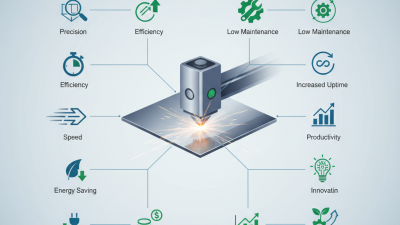
The chart presents a practical planning model for comparing machine specifications. Higher scores indicate a greater influence on long-term productivity, cut quality, operating cost, and business flexibility.

Power and cutting speed are important, but automation, positioning accuracy, material compatibility, energy efficiency, and serviceability can have an equally significant effect on total cost of ownership.

How to Compare Costs, Safety, Maintenance, and Support

Choosing the best laser cutting machine in 2026 requires more than comparing purchase prices. Grand View Research estimated the global laser cutting machine market at about USD 5.4 billion in 2023. Its forecast also suggests strong growth through 2030. That growth can hide expensive ownership mistakes. Compare the machine, chiller, extraction system, software, installation, and training as one budget.

Safety deserves a documented inspection, not a sales promise. Check enclosure integrity, interlocks, emergency stops, ventilation, and laser classification against ISO 12100 and IEC 60825-1. OSHA machine-guarding guidance also stresses preventing access to hazardous moving parts. Ask for measured noise and fume-control data. A clean enclosure is useful, but it does not replace local risk assessment. Small workshops often underestimate extraction maintenance.

Maintenance costs appear after production starts. Request recommended lens-cleaning intervals, filter prices, replacement-part availability, and technician response times. MarketsandMarkets has projected continued expansion in industrial laser applications, increasing pressure on service networks and spare parts. Compare annual service contracts carefully. “24/7 support” may only mean email access. Test the support channel before purchasing. Ask a technical question.

Track downtime for six months, including setup delays and failed cuts. That record may challenge your original assumptions. A cheaper machine can become costly when operators wait for parts, retraining, or remote diagnosis. Choose documented service procedures, transparent warranty limits, and training that includes real material samples, not only slides.